
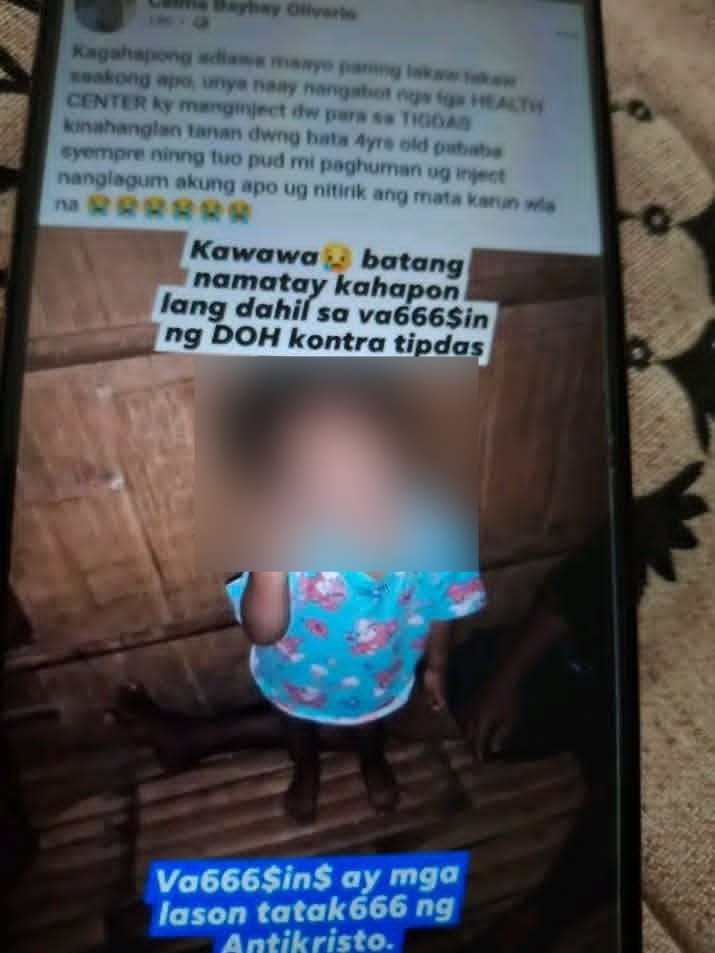
A viral photo circulating across social media platforms has raised significant anxiety among parents. The image shows a screenshot of a Facebook post featuring a photo of a young child, accompanied by sensationalized text claiming that the child died shortly after receiving a measles vaccine administered by Department of Health (DOH) health center workers. The post includes claims labeling vaccines as “poison” and referencing anti-vaccine conspiracy rhetoric.
Why Parents Experience Fear and Hesitancy
It is entirely natural for parents to feel protective and anxious when confronted with alarming messages regarding their children’s health. Visual posts alleging sudden illness or loss after medical interventions evoke intense emotional responses. In the digital age, unverified posts, graphic claims, and emotional narratives spread rapidly before health authorities can investigate or provide official context.
This environment of online misinformation leads to vaccine hesitancy. Parents are caught between the desire to shield their children from infectious diseases and the fear triggered by triggered by claims seen online.
The Event: DOH Supplemental Immunization Campaigns
The circulating image directly references government immunization drives aimed at combating measles (tipdas or tigdas). The Department of Health routinely conducts Supplemental Immunization Activities (SIA) targeting infants and young children under five years old.
Measles is a highly contagious, airborne viral infection that can lead to severe complications, including pneumonia, encephalitis (brain swelling), blindness, and death. Because young children are especially vulnerable to measles outbreaks, public health workers conduct community-level and health-center-based outreach to ensure high population immunity.
Parental Rights Under Philippine Law: The Right to Informed Consent and Refusal
A critical aspect of healthcare delivery in the Philippines is the legal principle of Informed Consent. Under Philippine law, general civil law principles, and health regulations governing medical procedures on minors:
- Mandatory Consent: Health workers cannot administer vaccines or perform medical procedures on a minor without the explicit consent of the parent or legal guardian.
- The Right to Reject: Parents retain the absolute legal right to accept or refuse any healthcare intervention, including routine or campaign vaccinations, on behalf of their children.
- Informed Decision-Making: Healthcare providers are legally obligated to inform parents about the nature, benefits, expected side effects, and potential risks of a vaccine before asking for signatures or verbal authorization.
While public health laws like Republic Act No. 10152 (Mandatory Infants and Children Health Immunization Act) establish immunization programs as a priority public health strategy, vaccination teams in the field operate under protocols requiring parental consent. Parents cannot be physically forced or coerced into vaccinating their children against their will.
Vaccine Properties and Safety Science
To address fears logically, it is essential to understand how measles vaccines are manufactured, tested, and administered:
- Live Attenuated Strains: The Measles, Mumps, and Rubella (MMR) or Measles-Rubella (MR) vaccines use weakened (attenuated) forms of the virus. The virus is modified so that it cannot cause the actual disease in a healthy child, but it enables the immune system to produce antibodies.
- Extensive Safety Testing: Before approval, vaccines undergo years of clinical trials to evaluate safety, efficacy, and correct dosage. Batch quality is continuously monitored by national regulatory agencies like the Philippine Food and Drug Administration (FDA).
- Normal Side Effects vs. Rare Events: Typical responses after vaccination include low-grade fever, mild rash, or temporary swelling at the injection site. These are signs that the body is building immunity. Severe adverse reactions are extremely rare (occurring in less than one in a million doses).
- Screening Protocols: Health workers conduct pre-vaccination screening to check if a child has underlying conditions, severe allergies, or acute illnesses that would make vaccination temporarily inappropriate.
August 9, 2026, Mikaila Abrinica