
Day: August 9, 2026

  • “Lason” nga ba ang Bakuna?

    “Lason” nga ba ang Bakuna?

    Viral Post ng Batang Namatay diumano sa Bakuna ng DOH, Nagdulot ng Matinding Takot at Init ng Debate sa Publiko!

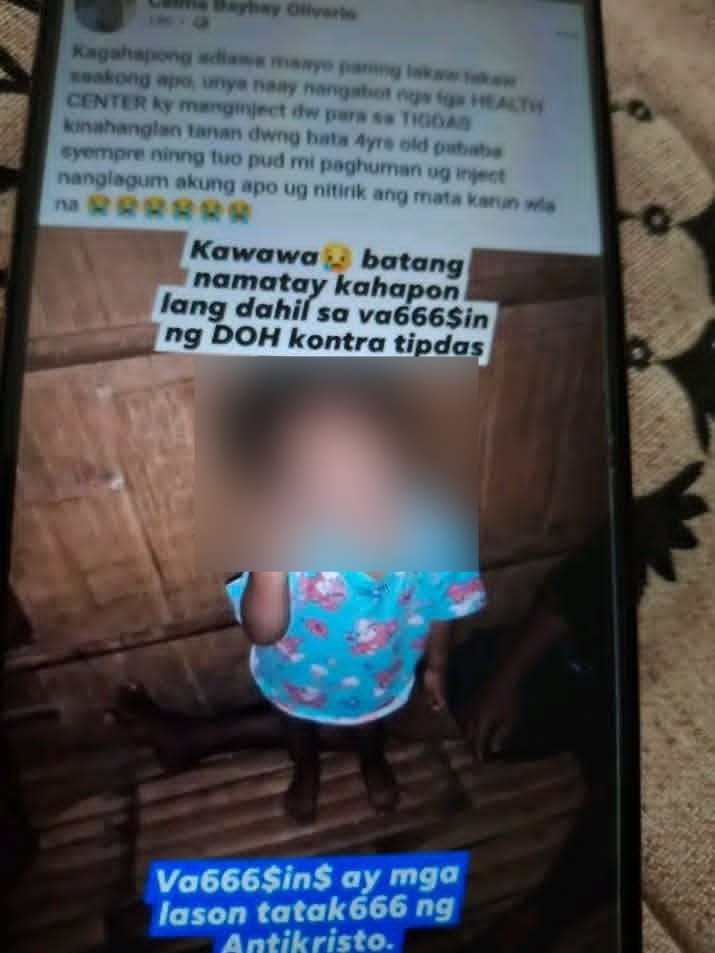
    ​Mabilis na kumakalat ngayon sa social media ang isang nakakabahalang post na nagpapakita ng larawan ng isang bata na pinalalabas na namatay umano matapos turukan ng bakuna kontra-tigdas ng mga health center worker mula sa Department of Health (DOH). May mga kasama pa itong mabibigat na salita na nag-aakusa sa bakuna bilang “lason” at “tatak ng Antikristo.”

    ​Dahil dito, nagwala ang emosyon ng publiko: Maraming magulang ang labis na natatakot ngayon, samantalang marami rin ang nagagalit at nagsasabing fake news lamang ito na pinalalaki ng mga anti-vaxxer.

    ​Bakit Nagpapanic ang mga Magulang?

    ​Hindi maiiwasang mag-alala ang sinumang magulang kapag buhay at kalusugan na ng sariling anak ang pinag-uusapan. Kapag nakakakita ng mga litrato ng bata na may kasamang kwento ng biglaang pagkakasakit o pagkamatay, natural na unang nagiging reaksyon ay ang matakot at magduda.

    ​Sa bilis ng pagse-share sa Facebook at iba pang platforms, madalas na umaabot agad ang ganitong mga kwento sa libu-libong pamilya bago pa man makapagpalabas ng opisyal na pahayag ang DOH o ang mga ospital. Ito ang nagiging dahilan kung bakit marami ang nag-aalinlangan at ayaw nang papuntahin ang kanilang mga anak sa mga health center.

    ​Ang Isyu: Bahay-Bahay na Bakunahan ng DOH sa Tigdas

    ​Ang kumakalat na post ay kaugnay ng malawakang kampanya ng gobyerno laban sa tigdas (measles o tipdas). Sa ilalim ng programang ito, nagbabahay-bahay o nagbubukas ng mga pasilidad ang mga health worker upang bakunahan ang mga batang edad 4 pababa.

    ​Ayon sa mga eksperto, ang tigdas ay isang napakahawang sakit na maaaring magdulot ng pamamaga ng utak, pulmonya, pagkabulag, o kamatayan sa mga bata. Subalit para sa mga magulang na nakapanood o nakakita ng viral post, nagiging sanhi ng matinding duda ang pagpunta ng mga health worker sa kanilang mga tahanan.

    ​May Karapatan bang Tumanggi ang Magulang Ayon sa Batas?

    ​Ito ang isa sa pinakamalaking usapin ngayon na nagpapatindi ng debate sa pagitan ng mga pamilya at ng mga otoridad sa kalusugan: Obligado ba ang magulang na pumayag?

    ​Ayon sa batas sa Pilipinas at sa mga pamantayan ng Informed Consent:

    • Karapatang Tumanggi: May buong legal na karapatan ang mga magulang na sabihing AYAW NILA at tanggihan ang pagpapabakuna sa kanilang anak.
    • Bawal ang Pilitan: Hindi pwedeng turukan ang bata nang walang malinaw na pahintulot o pirma ng magulang o guardian.
    • Kailangang Ipaliwanag: Tungkulin ng mga health worker na ipaliwanag muna kung ano ang bakuna, ano ang mga epekto nito, at ano ang mga pwedeng maramdaman ng bata bago magturok.

    ​Kahit na may mga batas tulad ng Republic Act No. 10152 na nagsusulong ng pambansang pagpapabakuna, hindi ito nangangahulugan na pwedeng pilitin ang isang pamilya nang labag sa kanilang kagustuhan.

    ​Ano nga ba ang Nilalaman ng Bakuna? Proteksyon o Panganib?

    ​Upang masuri kung may batayan ang takot ng publiko, mahalagang tingnan ang mismong katangian ng bakuna laban sa tigdas:

    1. Pina-hinang Virus: Ang bakuna ay naglalaman ng live attenuated virus—ibig sabihin, pinahina ang virus upang hindi ito makapagdulot ng totoong sakit sa bata, pero sapat ito para turuan ang immune system na lumaban.
    2. Dumaan sa Pagsusuri: Bago ilabas sa merkado o ipamigay sa mga health center, dumaan ito sa napakahabang clinical trials at pagsusuri ng Food and Drug Administration (FDA).
    3. Maaaring Epekto (Side Effects): Karaniwan sa mga bata ang magkaroon ng kaunting lagnat, pamumula, o pananakit sa bahaging tinurukan pagkatapos magpabakuna. Ito ay senyales na gumagana ang immunity ng katawan, at hindi ibig sabihin na “nalason” ang bata.
    4. Health Screening: Bago turukan, kinakailangang suriin ng health worker kung malusog ang bata o kung may mga allergy at umiiral na sakit na pwedeng maging dahilan para ipagpaliban muna ang pagtuturok.

    ​Kayo, mga magulang—sang-ayon ba kayo sa patuloy na pagbabahay-bahay ng pagpapabakuna, o dapat bang itigil muna ito habang inimbestigahan ang mga ganitong balita sa social media?
  • Viral Anti-Vaccine Posts Fuel Fear: Understanding Parental Rights, Immunization Science, and DOH Measles Campaigns

    Viral Anti-Vaccine Posts Fuel Fear: Understanding Parental Rights, Immunization Science, and DOH Measles Campaigns

    A viral photo circulating across social media platforms has raised significant anxiety among parents. The image shows a screenshot of a Facebook post featuring a photo of a young child, accompanied by sensationalized text claiming that the child died shortly after receiving a measles vaccine administered by Department of Health (DOH) health center workers. The post includes claims labeling vaccines as “poison” and referencing anti-vaccine conspiracy rhetoric.

    Why Parents Experience Fear and Hesitancy

    It is entirely natural for parents to feel protective and anxious when confronted with alarming messages regarding their children’s health. Visual posts alleging sudden illness or loss after medical interventions evoke intense emotional responses. In the digital age, unverified posts, graphic claims, and emotional narratives spread rapidly before health authorities can investigate or provide official context.
    This environment of online misinformation leads to vaccine hesitancy. Parents are caught between the desire to shield their children from infectious diseases and the fear triggered by triggered by claims seen online.

    The Event: DOH Supplemental Immunization Campaigns

    The circulating image directly references government immunization drives aimed at combating measles (tipdas or tigdas). The Department of Health routinely conducts Supplemental Immunization Activities (SIA) targeting infants and young children under five years old.
    Measles is a highly contagious, airborne viral infection that can lead to severe complications, including pneumonia, encephalitis (brain swelling), blindness, and death. Because young children are especially vulnerable to measles outbreaks, public health workers conduct community-level and health-center-based outreach to ensure high population immunity.

    Parental Rights Under Philippine Law: The Right to Informed Consent and Refusal

    A critical aspect of healthcare delivery in the Philippines is the legal principle of Informed Consent. Under Philippine law, general civil law principles, and health regulations governing medical procedures on minors:

    • Mandatory Consent: Health workers cannot administer vaccines or perform medical procedures on a minor without the explicit consent of the parent or legal guardian.
    • The Right to Reject: Parents retain the absolute legal right to accept or refuse any healthcare intervention, including routine or campaign vaccinations, on behalf of their children.
    • Informed Decision-Making: Healthcare providers are legally obligated to inform parents about the nature, benefits, expected side effects, and potential risks of a vaccine before asking for signatures or verbal authorization.
      While public health laws like Republic Act No. 10152 (Mandatory Infants and Children Health Immunization Act) establish immunization programs as a priority public health strategy, vaccination teams in the field operate under protocols requiring parental consent. Parents cannot be physically forced or coerced into vaccinating their children against their will.

    Vaccine Properties and Safety Science

    To address fears logically, it is essential to understand how measles vaccines are manufactured, tested, and administered:

    1. Live Attenuated Strains: The Measles, Mumps, and Rubella (MMR) or Measles-Rubella (MR) vaccines use weakened (attenuated) forms of the virus. The virus is modified so that it cannot cause the actual disease in a healthy child, but it enables the immune system to produce antibodies.
    2. Extensive Safety Testing: Before approval, vaccines undergo years of clinical trials to evaluate safety, efficacy, and correct dosage. Batch quality is continuously monitored by national regulatory agencies like the Philippine Food and Drug Administration (FDA).
    3. Normal Side Effects vs. Rare Events: Typical responses after vaccination include low-grade fever, mild rash, or temporary swelling at the injection site. These are signs that the body is building immunity. Severe adverse reactions are extremely rare (occurring in less than one in a million doses).
    4. Screening Protocols: Health workers conduct pre-vaccination screening to check if a child has underlying conditions, severe allergies, or acute illnesses that would make vaccination temporarily inappropriate.

      August 9, 2026, Mikaila Abrinica

    • Health Officials Probe Death of Sultan Kudarat Toddler Following Measles Immunization

      Health Officials Probe Death of Sultan Kudarat Toddler Following Measles Immunization

      PALIMBANG, Sultan Kudarat — Health authorities in Region 12 have launched a full-scale causality assessment into the death of a two-year-old girl who passed away shortly after receiving a measles-rubella (MR) vaccine during a government-led immunization drive.

      The toddler reportedly developed severe vomiting, diarrhea, and rapid weakness roughly an hour after inoculation, passing away on February 4.

      In a joint statement, local health officials expressed condolences to the family while urging the public to wait for official findings before drawing conclusions.

      “A careful and thorough investigation is currently underway… to ensure that all facts are properly examined with transparency, sensitivity, and adherence to established medical protocols,” the Municipal Health Office (MHO) of Palimbang stated. At present, no direct medical link between the vaccine and the child’s cause of death has been established.

      The incident occurred amid the Department of Health’s (DOH) “Ligtas Tigdas” supplemental immunization campaign, which aims to vaccinate millions of young children across Mindanao to combat rising measles transmission.

      The DOH Mission: Eradicating Preventable Outbreaks

      The National Immunization Program (NIP) of the Department of Health operates under a core mandate: protecting communities from severe illness, disability, and death caused by vaccine-preventable diseases.

      Measles remains one of the world’s most contagious airborne viruses, capable of leading to severe complications such as pneumonia, brain swelling, and fatality. To prevent outbreaks, public health standards require nationwide coverage to reach at least 95%. At this threshold, community immunity (herd immunity) is achieved, effectively creating a protective shield around infants too young to be vaccinated and individuals with compromised immune systems.

      How Vaccines Work: The Science of Protection

      Vaccines are engineered to prime the human immune system to defend against dangerous pathogens without exposing the body to the full severity of a natural infection.

      • Antigenic Trigger: Vaccines contain an antigen—such as a weakened or killed virus, or a fragment of its structure—that acts as a decoy.
      • Immune Activation: Upon injection, white blood cells recognize the antigen as foreign and generate specific antibodies to neutralize it.
      • Long-Term Memory: Once the artificial threat is resolved, the immune system stores specialized “memory cells.” If the body encounters the actual virus in the future, these cells respond immediately, eliminating the virus before it can cause severe disease.

      The measles-rubella vaccine utilizes a live-attenuated virus—a strain weakened under lab conditions so that it stimulates strong, lasting immunity without causing active disease in healthy recipients.

      Parental Choice and Rights Under Philippine Law

      While Republic Act No. 10152 mandates basic immunization for infants, the DOH has consistently clarified that vaccination remains voluntary and subject to parental consent.

      Health Secretary Teodoro Herbosa affirmed that the government does not impose penalties or force on parents who decline vaccines, recognizing both human rights and individual medical contraindications.

      Health agencies emphasize that their primary role is providing transparent, evidence-based guidance. While parents retain the legal right to decide on their children’s medical care, public health officials continue to stress that standardized vaccines undergo rigorous safety testing and remain the most effective tool to prevent life-threatening viral outbreaks. (August 9, 2026, Mikaila Abrinica)